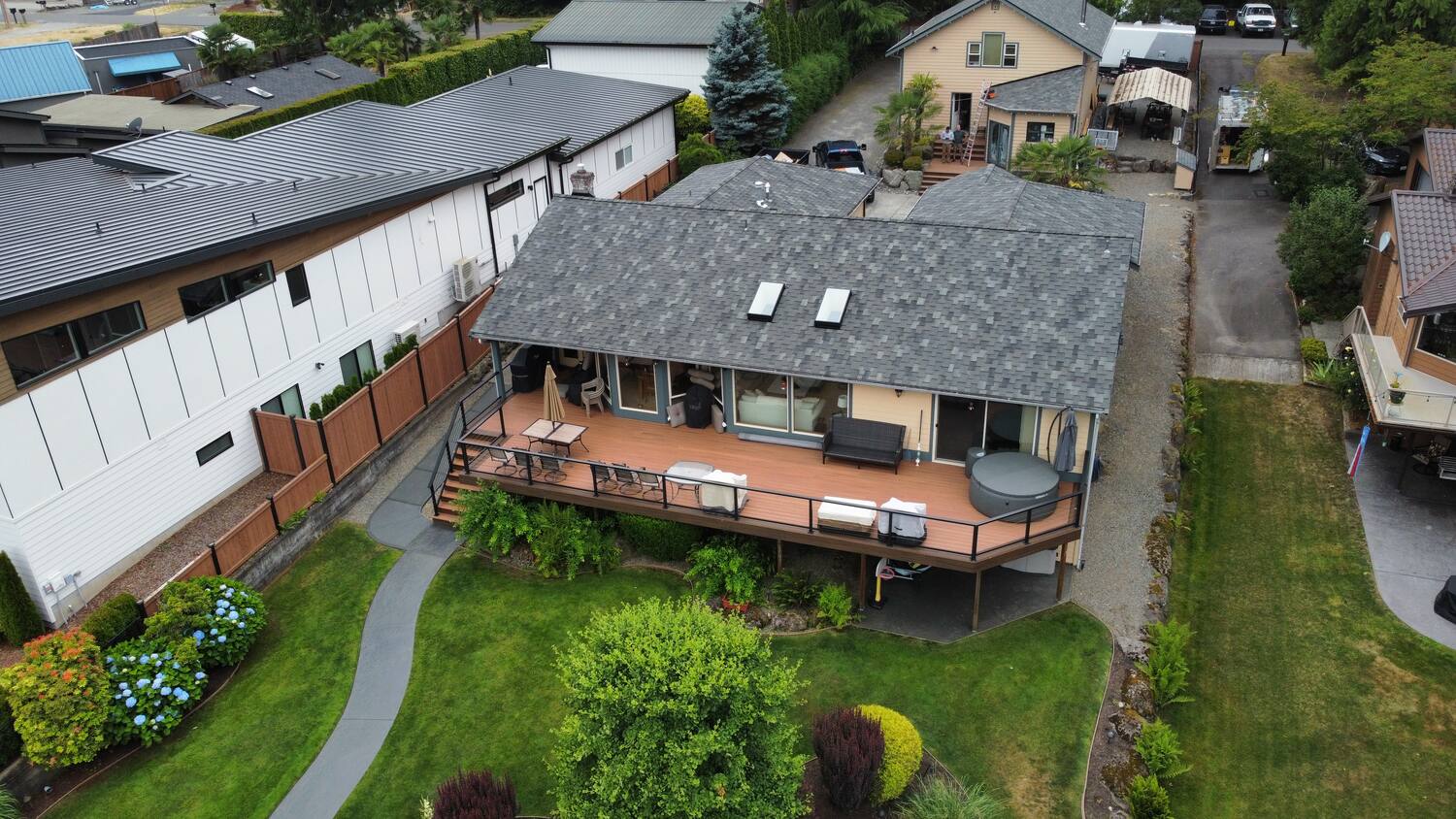
Bonney Lake's homes sit up on the plateau above the Puyallup valley, which means they catch more wind than the valley floor and can hold a dusting of snow a little longer. It's one of the plateau's most established communities — a mix of 1970s–90s homes due for their second or third roof and a wave of newer subdivisions.
What Bonney Lake roofs are up against
Up here, wind uplift and moss are the two things we design around. Plateau homes take more wind than the valley, so correct nailing patterns and a rated starter/ridge system matter — it's the difference between a roof that holds and one that lifts in a windstorm. And like everywhere in the Northwest, north-facing slopes grow moss; algae-resistant shingles (or a metal roof that simply won't hold moss) pay off here.
Bonney Lake neighborhoods we serve
Sky IslandTehaleh areaDowntown / MidtownAllan Yorke ParkSR-410 corridorLakeridge
Why Bonney Lake homeowners call Zenith
We're based right here on the Lake Tapps plateau, so a Bonney Lake roof is a few minutes from our shop — not a cross-county drive with a markup. Because it's a higher-value market, most plateau homeowners lean toward our better and best options: Malarkey for impact and warranty, or standing seam metal for a roof that outlasts the mortgage.
Bonney Lake is home turf. Enter your address in the
instant estimator and we'll price your specific roof from satellite in about a minute.